
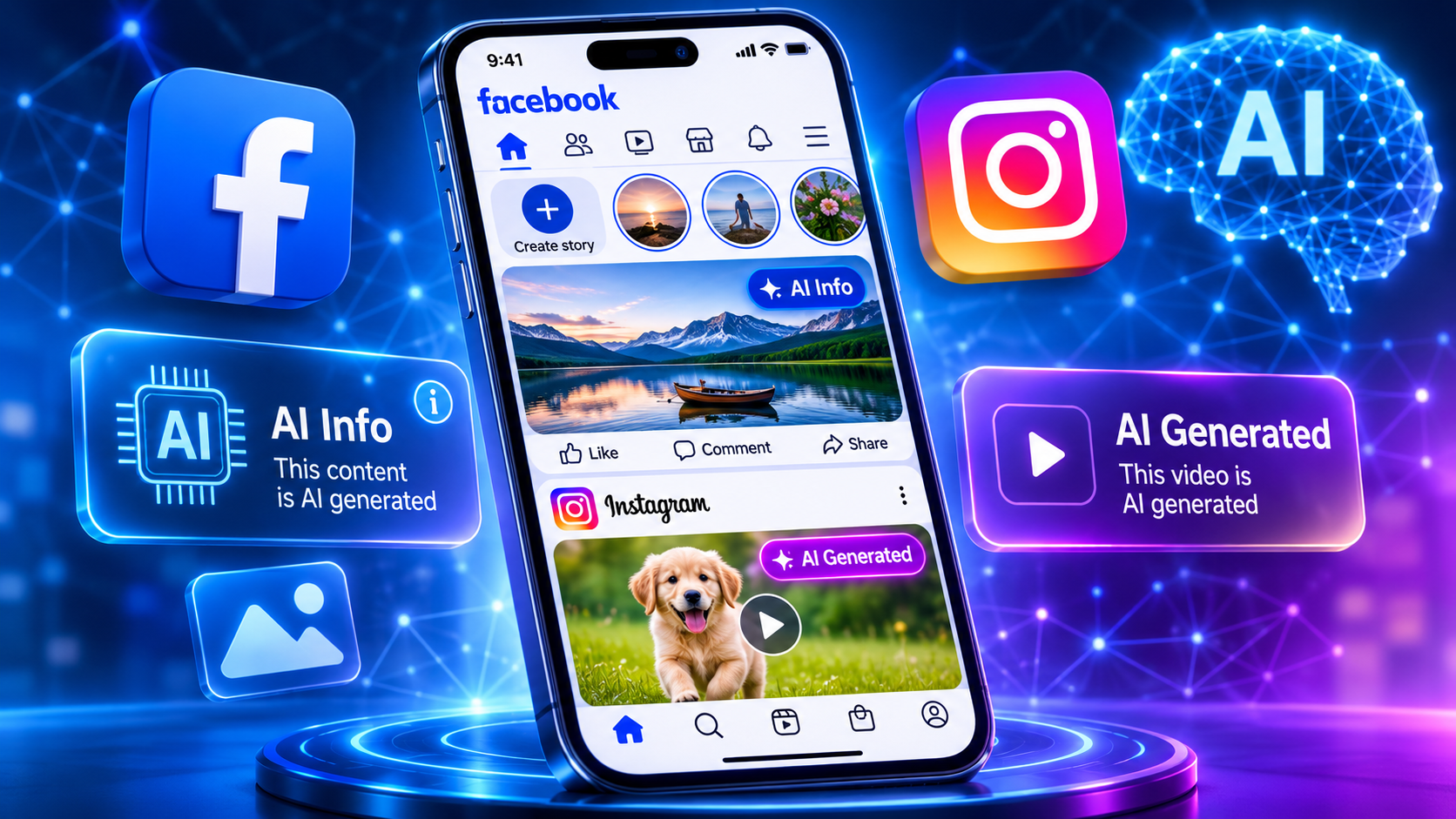
Social media is changing rapidly as artificial intelligence becomes more common. Today, creators use AI tools to generate images, videos, and other content. Consequently, platforms like Facebook and Instagram are introducing greater transparency around AI-generated media.
In 2026, understanding AI content labels is important for creators, businesses, and everyday users. These labels help people recognize when content involves artificial intelligence. Moreover, they encourage transparency and help audiences make informed decisions.
If you publish content on social media, you should understand how these labels work. Here's what Facebook and Instagram users need to know.
What Are AI Content Labels on Facebook and Instagram?
AI content labels are notices that identify media created or significantly modified using artificial intelligence. They provide additional context about the content people see.
For example, Meta uses the label "AI info" across its platforms. Users can select this label to learn more about a post's AI involvement.
However, not every post receives the same label. Meta considers available technical signals and creator disclosures when identifying AI-generated content.
Why Does Meta Add AI Labels to Social Media Content?
AI technology makes creating realistic digital content easier than ever. However, some AI-generated images and videos can look almost identical to real footage.
Therefore, transparency has become increasingly important.
Meta introduced AI labels to help users understand the content they encounter. These labels also provide useful context when images, videos, or audio involve artificial intelligence.
Furthermore, transparency helps audiences make better decisions about online information. It allows creators to use AI tools while informing their followers.
How Facebook and Instagram Detect AI-Generated Content
Meta uses different methods to identify AI-generated or modified media. These methods include technical signals and information provided by content creators.
1. AI Metadata and Digital Signals
Some AI tools add information to generated images and videos. This information can help platforms recognize AI involvement.
For example, industry standards such as C2PA and IPTC provide signals about digital content. Meta can use supported signals when identifying AI-generated media.
2. Creator Self-Disclosure
Creators can also disclose when their content involves artificial intelligence. Facebook and Instagram provide disclosure options for relevant posts.
This approach helps Meta identify AI-generated media when automatic detection cannot identify it.
3. Automated Detection Systems
Meta also works on technology that identifies AI-generated content. These systems help recognize certain digital signals and patterns.
However, automatic detection is not perfect. Some AI-generated content may not contain recognizable signals.
Do You Need to Add an AI Label Before Posting?
If you create content using AI tools, you should understand Meta's disclosure requirements.
Meta requires disclosure for certain photorealistic videos and realistic-sounding audio. This includes content digitally created or altered using AI.
Moreover, creators should use the available disclosure option when applicable. Failing to disclose qualifying content may result in penalties.
Images follow a different approach. Meta may automatically apply an AI information label when it detects relevant signals.
Therefore, always review the latest platform guidelines before publishing AI-generated content.
Does an AI Label Reduce Your Facebook or Instagram Reach?
Many creators worry that AI labels might reduce their post visibility. However, an AI label does not automatically mean your content violates platform rules.
Meta uses these labels primarily to provide transparency and additional information. AI-generated content can still be shared on its platforms.
Nevertheless, content must follow the applicable Community Standards. Misleading, harmful, or prohibited content can face separate restrictions.
Therefore, focus on creating useful, original, and engaging posts. Also, follow the relevant disclosure requirements.
Can AI Labels Appear on Images You Did Not Create With AI?
Yes, this can happen in certain situations.
For example, some editing applications include technical information in exported images. Meta may interpret these signals as evidence of AI involvement.
Additionally, ordinary editing and AI-powered editing are not always treated equally. Meta has adjusted its labeling approach to provide more context about how AI was used.
Consequently, an AI label does not always mean an image was entirely generated by artificial intelligence.
How Can Creators Manage AI Information in Their Content?
Social media creators should pay attention to the information attached to their media files.
Here are some practical steps to consider:
- Check your editing tools: Understand how your image and video applications handle AI-related information.
- Review disclosure settings: Use Meta's disclosure options when your content requires them.
- Understand your content: Know whether you generated, modified, or simply edited your media.
- Check platform guidelines: Follow the latest Facebook and Instagram publishing requirements.
- Protect your privacy: Review hidden information before sharing personal images online.
Additionally, creators can use metadata-cleaning tools to remove unnecessary information from their media files.
However, removing metadata does not replace required AI disclosures. Always follow the applicable platform rules.
What Should Facebook and Instagram Users Remember in 2026?
AI content labels are becoming an important part of social media transparency. Both creators and viewers should understand their purpose.
For creators, responsible disclosure helps maintain audience trust. For viewers, these labels provide additional information about digital content.
Furthermore, AI detection technology continues to develop. Therefore, labeling systems may become more advanced over time.
Remember that an AI label is not necessarily a warning. Instead, it provides useful information about how digital content was created or modified.
Final Thoughts
AI technology offers exciting opportunities for social media creators. However, transparency remains important when publishing AI-generated images, videos, and audio.
In 2026, Facebook and Instagram users should understand how AI information labels work. They should also follow Meta's disclosure requirements when publishing relevant content.
Ultimately, responsible AI use helps create a more transparent social media experience. Stay informed, protect your digital privacy, and share content responsibly.